

OUR ORIGIN STORY
In 2011, 14-year-old Nadia Hilton-Adams, a Junior USTA and high school all-region tennis player, won Maria Sharapova’s "Use Your Instinct" essay contest, sponsored by Tennis Channel & Head Racquet Sports. Her prize was a ½ day visit and hitting session in Greenville, SC, where Maria traveled to meet and hit with Nadia and two friends.
Wanting to thank Maria in a meaningful way, Nadia learned that Sharapova served as ambassador for the United Nations Development Programme (UNDP) and decided to spend the next six months fundraising for her cause to surprise her.
Working quietly behind the scenes with Maria’s management team, Nadia did indeed surprise Maria with a gift of nearly $6,000, which was matched by Head Racquet sports; bringing the total contribution to $12,000.
The one-minute Tennis Channel feature aired nationally and continued running ran for more than five years.
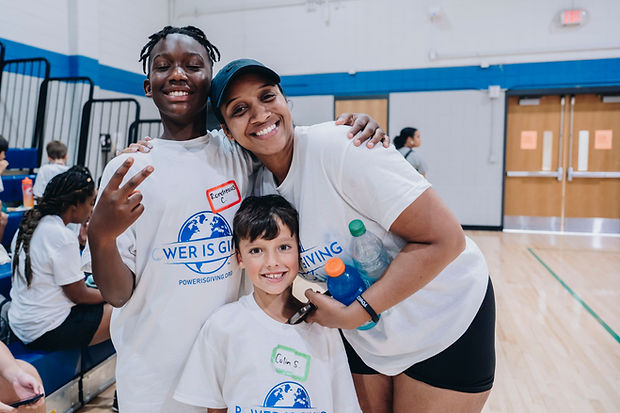
Shortly thereafter, Nadia and her mother, Dawn Hilton-Williams, partnered with local leaders to launch free monthly fitness and self-esteem programs across community centers in Upstate, SC.
In 2014, Nadia accepted a full Division I athletic scholarship to North Carolina A&T State University, where she helped lead the women’s tennis team to winning seasons and back-to-back MEAC Championship berths.
While balancing collegiate athletics and academics, Nadia remained committed to community youth through fundraising efforts and community centered tennis programming. During the summer, she also worked as a Nike Sports (Tennis) Camp Lead Instructor in Florida.
By 2016, Power is Giving was formally established as a 501(c)(3) organization and in 2023, relocated operations and programs from Upstate, SC to Charlotte, NC


WHAT MAKES US DIFFERENT?
Aside from being the only non-profit organization providing free, culturally aligned, whole food, plant-based (WFPB) nutrition and lifestyle education programs in Charlotte and Mecklenburg County, NC, we share peer reviewed, evidence-based insights, flavors and protocols that support the prevention, arrest and reversal of lifestyle driven chronic illnesses in disproportionately impacted communities.
WFPB Lifestyle benefits include:
-
High fiber, low caloric and nutrient-rich
-
Helps to significantly lower inflammation, cholesterol and blood sugar
-
Helps to improve immune function and lowers risk of colds & flus
-
Helps to improve sleep, mood and mental clarity
-
Supports the prevention and arrest of the progression of numerous autoimmune diseases
-
Supports the prevention, arrest and reversal heart disease and type 2 diabetes
-
Provide tools that support improved quality of life